Candy Thermometer vs. Meat Thermometer: Which to Choose?


 288 Comments


If you enjoy cooking at home and care about great taste, food safety, and consistent results, using the right food thermometer can completely change your experience in the kitchen. Many home cooks already rely on food thermometers, but one common question keeps coming up:
Candy thermometer vs meat thermometer, which one do I need?
At first glance, both tools measure food temperature, so it's easy to assume they do the same job. This leads to frequent questions like:
- Is a candy thermometer the same as a meat thermometer?
- Are candy thermometers and meat thermometers the same?
- Can I use one food thermometer for everything?
We'll explain the difference between a candy thermometer and a meat thermometer, how each one works, when and when not they can be mixed, and which one fits your cooking habits best. By the end, you'll confidently know which food thermometer to choose or why having both makes sense
What is a Meat Thermometer?
A meat thermometer is designed to measure the internal temperature of proteins. Its primary job is food safety and texture. It needs to tell you if your chicken has reached the safe mark or if your steak is sitting at a juicy. Because meat is a solid, these thermometers feature a sharp, pointed probe meant to be inserted deep into the thickest part of the muscle.
Common Uses
- Roasting turkey, chicken, beef, pork
- Grilling and smoking
- Sous vide monitoring
- Checking doneness and food safety
Key Features
- Fast and accurate readings
- Designed for thick foods
- Often digital
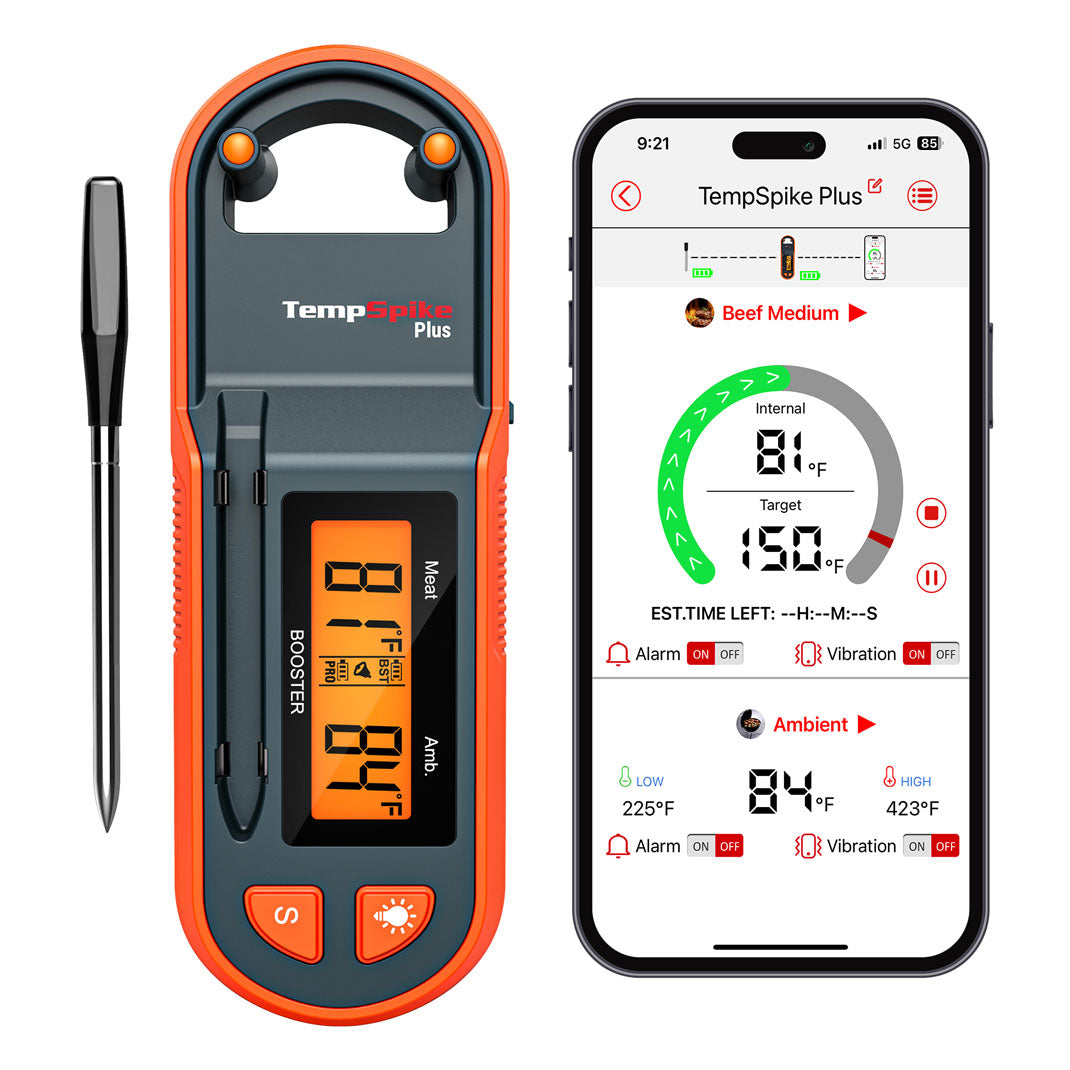
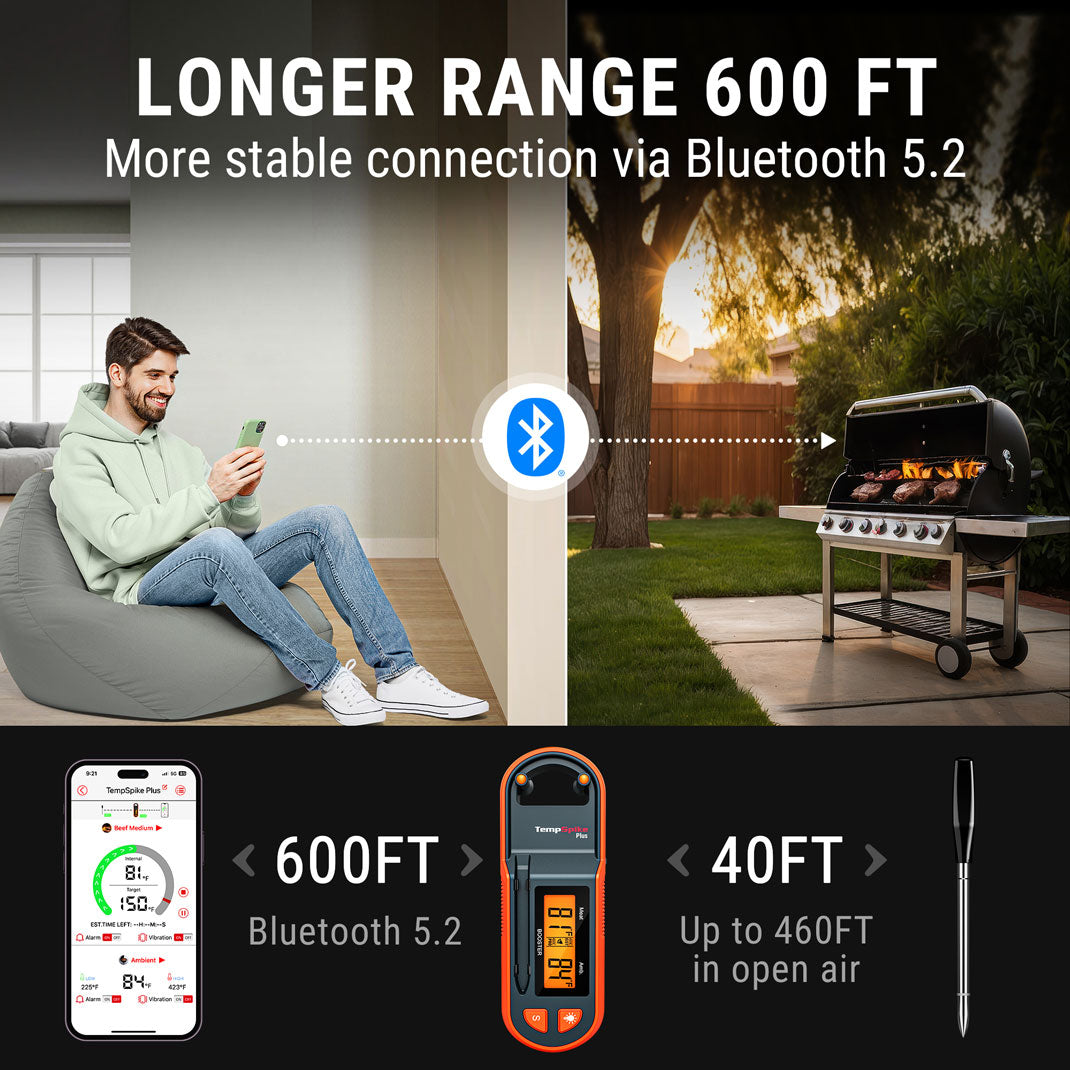
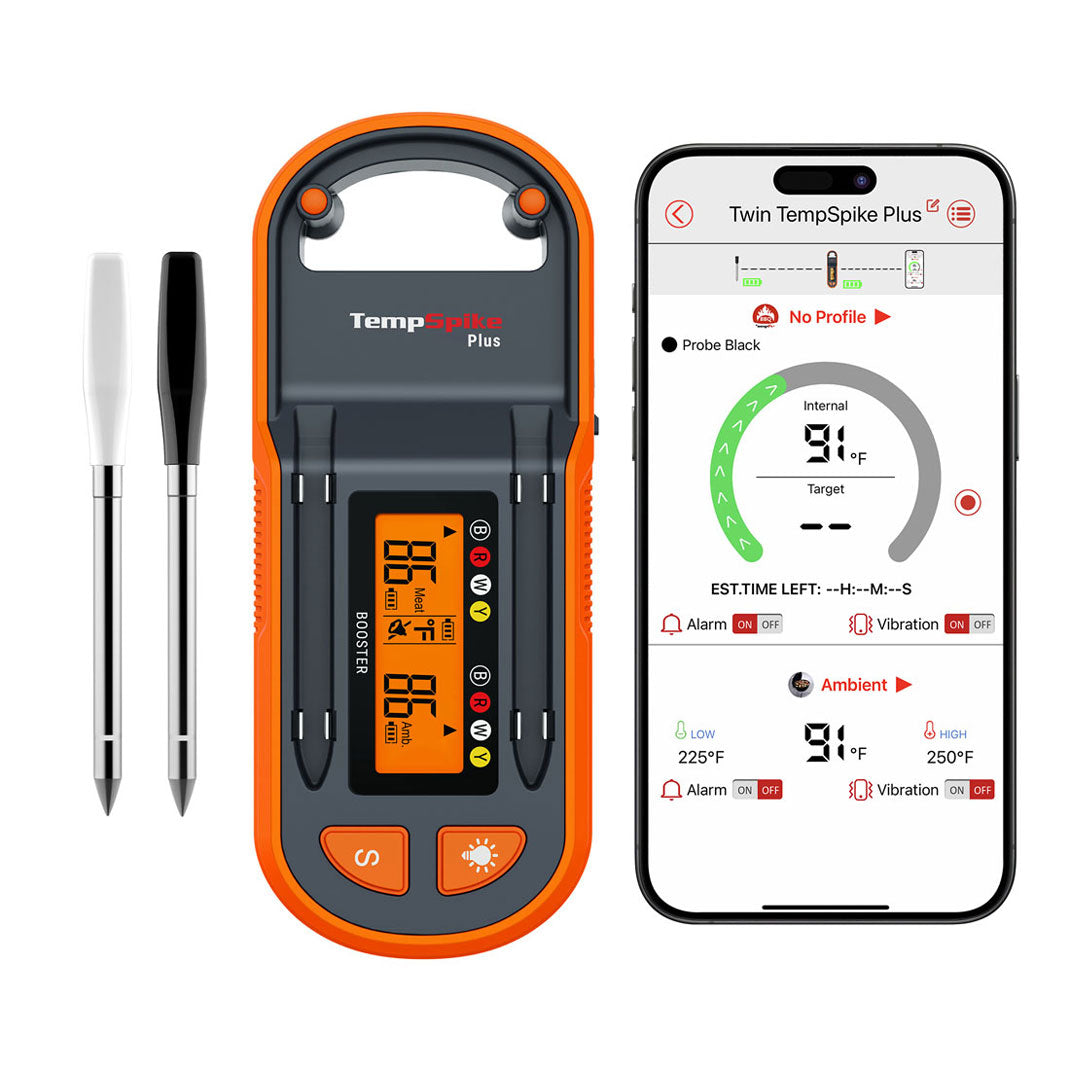
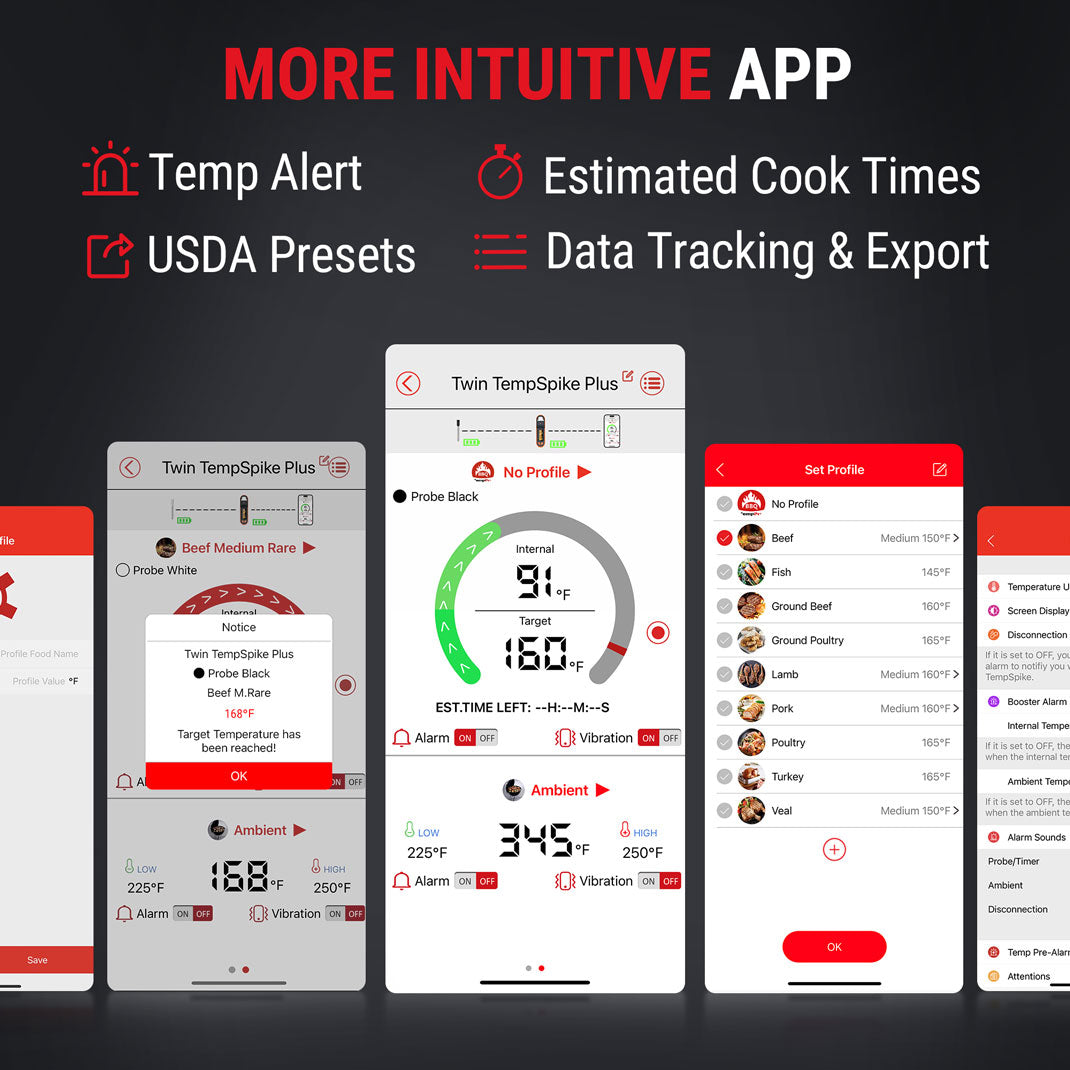
Many models include wireless or app-based monitoring
When comparing meat vs candy thermometer, the meat thermometer focuses on speed, accuracy, and safety, not extreme heat. Additionally, a meat thermometer is focused on internal food temperature, not boiling liquids on the stovetop.
What is a Candy Thermometer?
A candy thermometer is built to handle the extreme heat of boiling sugar and hot oil. Sugar work requires incredible precision at high ranges, often up to 400℉or more. Because you are measuring liquids, these thermometers usually feature a clip to attach to the side of a pot and a "bulb" or sensor that stays submerged without touching the bottom of the pan.
Common Uses
- Candy making (caramel, toffee, fudge, hard crack stages)
- Sugar syrup stages
- Deep frying
- Making jam, jelly, or marshmallows
- Heating oil precisely
Key Features
- High temperature range
- Often analog or clip-on design
- Long probe to sit safely in hot liquids
- Slow, stable readings (ideal for sugar stages)
In short, a candy thermometer excels where high heat and precision over time are required.
What's the Difference between Candy Thermometer vs. Meat Thermometer?
To truly understand the difference between meat and candy thermometer builds, we have to look at four specific factors:
Many home cooks ask "is a candy thermometer the same as a meat thermometer" or "is candy thermometer same as meat thermometer". The short answer is no: there is a clear difference between a candy thermometer and a meat thermometer in design, temperature range, and use.
Temperature Range
The most significant difference between candy thermometer and meat thermometer models is the "ceiling" of the temperature.
- Meat Thermometers usually max out around 200℉ to 300℉ because no meat is ever cooked beyond that point unless you are turning it into charcoal.
- Candy Thermometers must reach 400℉ to 500℉ to . Sugar stages like "Hard Crack" (300℉ to 310℉) or caramelization happen far above the limits of many basic meat probes.

Physical Design
When comparing candy thermometer vs. meat, look at the probe.
- Meat probes are sharp to pierce fibers.
- Candy probes are often long to keep your hands away from splattering oil and include a pot clip. Some traditional candy thermometers are made of glass, though modern digital versions are now the gold standard for safety.
Response Speed
In meat cooking, a few seconds rarely matter. In candy making, the "Hard Ball" stage happens in the blink of an eye. Therefore, the difference between a meat thermometer and a candy thermometer often lies in how fast the sensor refreshes.

Design Purpose
- Candy thermometer: stays in the pot, tracking the temperature of a liquid mixture (sugar, oil, Liquids, syrup) as it heats.
- Meat thermometer: is inserted into the center of meat, often near the end of cooking or left in (for some oven-safe or wireless models) to monitor internal temperature of food (Beef, chicken, turkey, pork, seafood ) as it rises.
This is why the difference between meat and candy thermometer is more than just numbers on a dial; it's also about how each is used safely and effectively in your kitchen.
Mounting & Use
- Candy thermometer: Often clips to pot
- Meat thermometer: Inserted into meat
This is the core candy thermometer meat thermometer difference.
Comparison table: Candy Thermometer vs. Meat Thermometer
To truly understand the difference between a candy thermometer and a meat thermometer, let's break down their characteristics side-by-side.
| Feature | Candy Thermometer | Meat Thermometer |
|---|---|---|
| Primary Purpose | Measures the temperature of sugar syrups, hot oil, and deep-frying liquids. | Measures the internal temperature of meats, casseroles, and baked dishes. |
| Typical Temperature Range | High-heat focused: approximately 100°F–400°F+, ideal for candy stages. | Lower but wider range: approximately 0°F–300°F, covering safe cooking temps for proteins. |
| Accuracy & Precision | Designed for high-temperature accuracy to prevent burned sugar or overheated oil. | Designed for food-safety accuracy to ensure meat reaches safe internal temperatures. |
| Shape & Design | Long probe with a clip to attach securely to deep pots without touching the bottom. | Sharp probe designed to pierce food; available as instant-read, leave-in, or wireless models. |
| Key Differentiator | Often includes sugar stage markings like Soft Ball or Hard Crack for easy reference. | Fast response time and precise penetration for accurate readings in thick cuts of meat. |
| Best For | Candy, caramel, jam, deep frying, and oil temperature control. | Steaks, roasts, poultry, turkey, smoking, seafood, burgers, and more. |
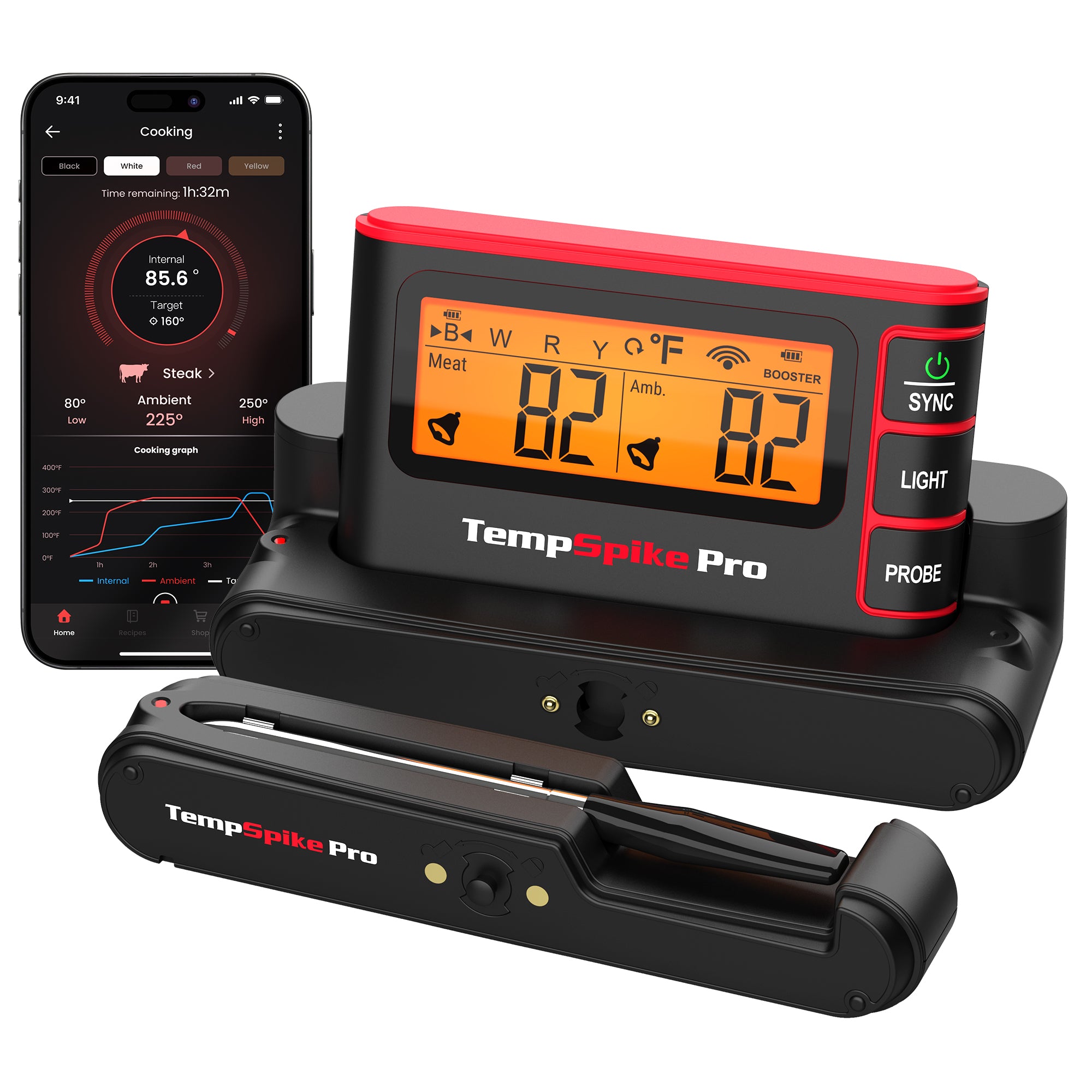
| Example Product | ThermoPro TP511 Candy Thermometer (high-heat, clip-on design) | ThermoPro TempSpike Pro TP980 (truly wireless, Wi-Fi & Bluetooth) |
Can You Use a Candy Thermometer for Meat and Vice Versa?
A common question is: "Is candy thermometer same as meat thermometer when it comes to swapping them?" The reality is a bit nuanced.
Can you use a candy thermometer for meat?
Technically, yes, if the probe is thin enough. However, without a pointed tip, it's hard to get an accurate reading in the center of a roast.
- Unsanitary & Impractical: The bulky, clip-on design is not meant for piercing meat. It's difficult to get a clean reading in the center.
- Potentially Dangerous: It lacks the sharp, sanitary probe needed to check multiple spots safely in raw meat.
- Slow and Awkward: You cannot quickly check doneness; it's a leave-in device for liquid.
While a high-quality digital instant-read cooking thermometer can sometimes bridge the gap for tasks like deep-frying or bread-making, true candy work demands a dedicated tool. Understanding this candy thermometer vs food thermometer distinction is key to kitchen success.
Can you use a meat thermometer for candy?
Usually, no. Most meat thermometers will simply fail or break if submerged in oil. Furthermore, without a pot clip, you risk the probe touching the bottom of the pan, giving you a false reading of the stove's heat rather than the sugar's heat.
- Risk of Damage: The plastic parts or battery compartment on many digital meat thermometers are not designed for prolonged immersion in boiling sugar (over 300°F).
- Imprecise for Stages: It may not have the fine-grained accuracy needed to hit the exact soft-ball stage.
- Poor Fit: Its short probe isn't meant to be clipped to a pot, risking inaccurate readings or it falling in.
What's the Right Tools for Candy Making and Meat?
To achieve professional results, you need a specialized kitchen tool for each "arena" of cooking. Here are the two flagship models that solve the meat vs. candy thermometer debate.
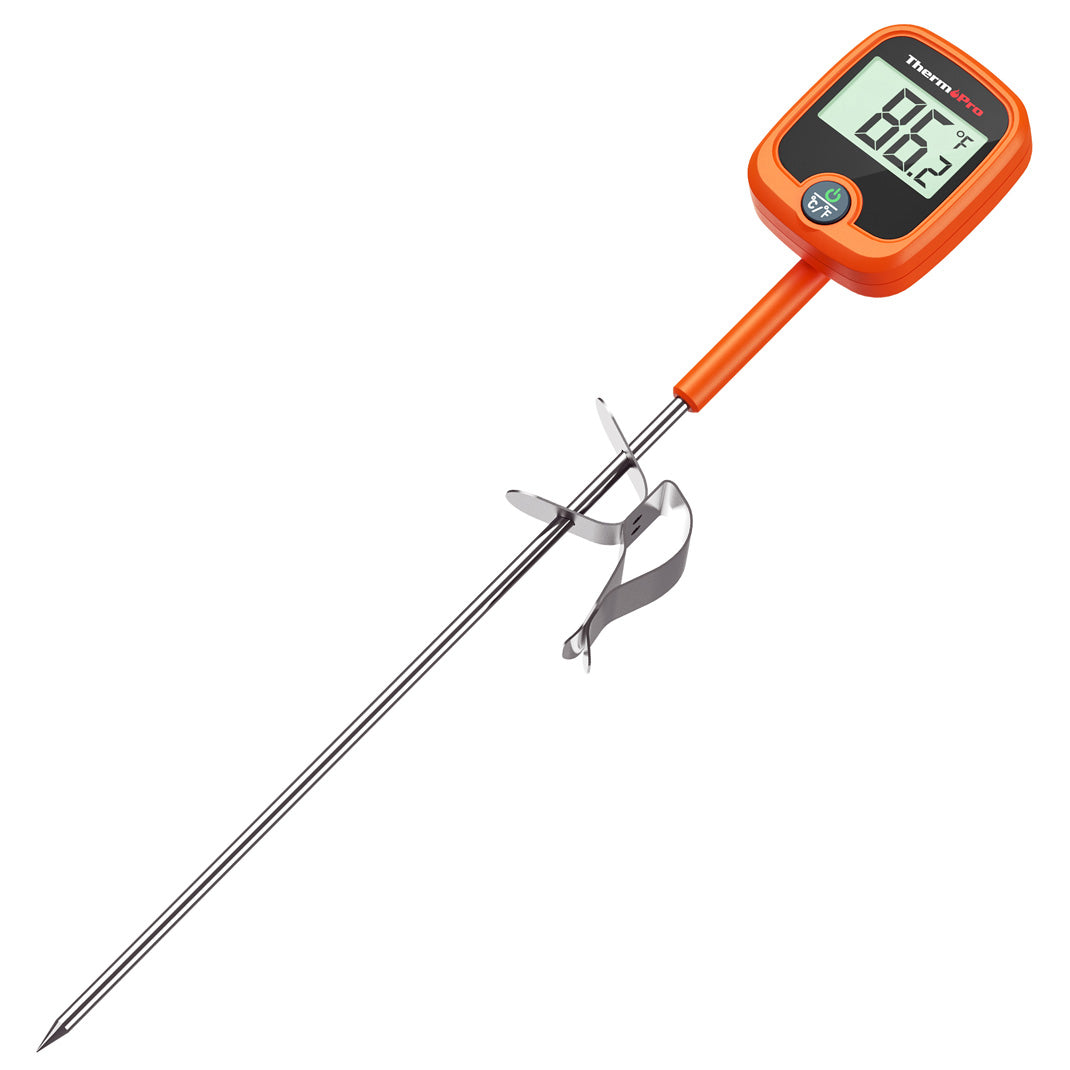
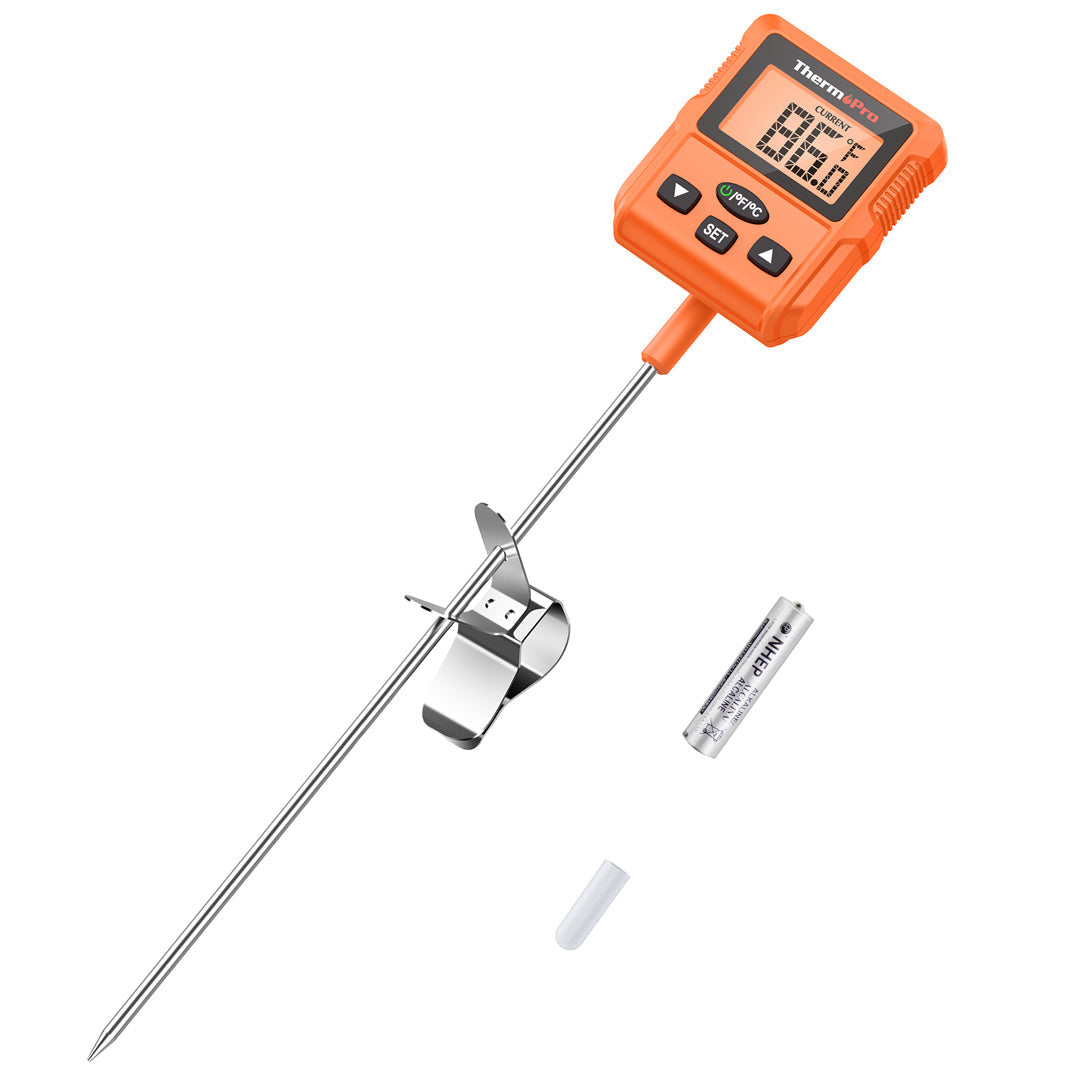
For Candy Making & Deep-frying: ThermoPro TP511 Digital Candy Thermometer
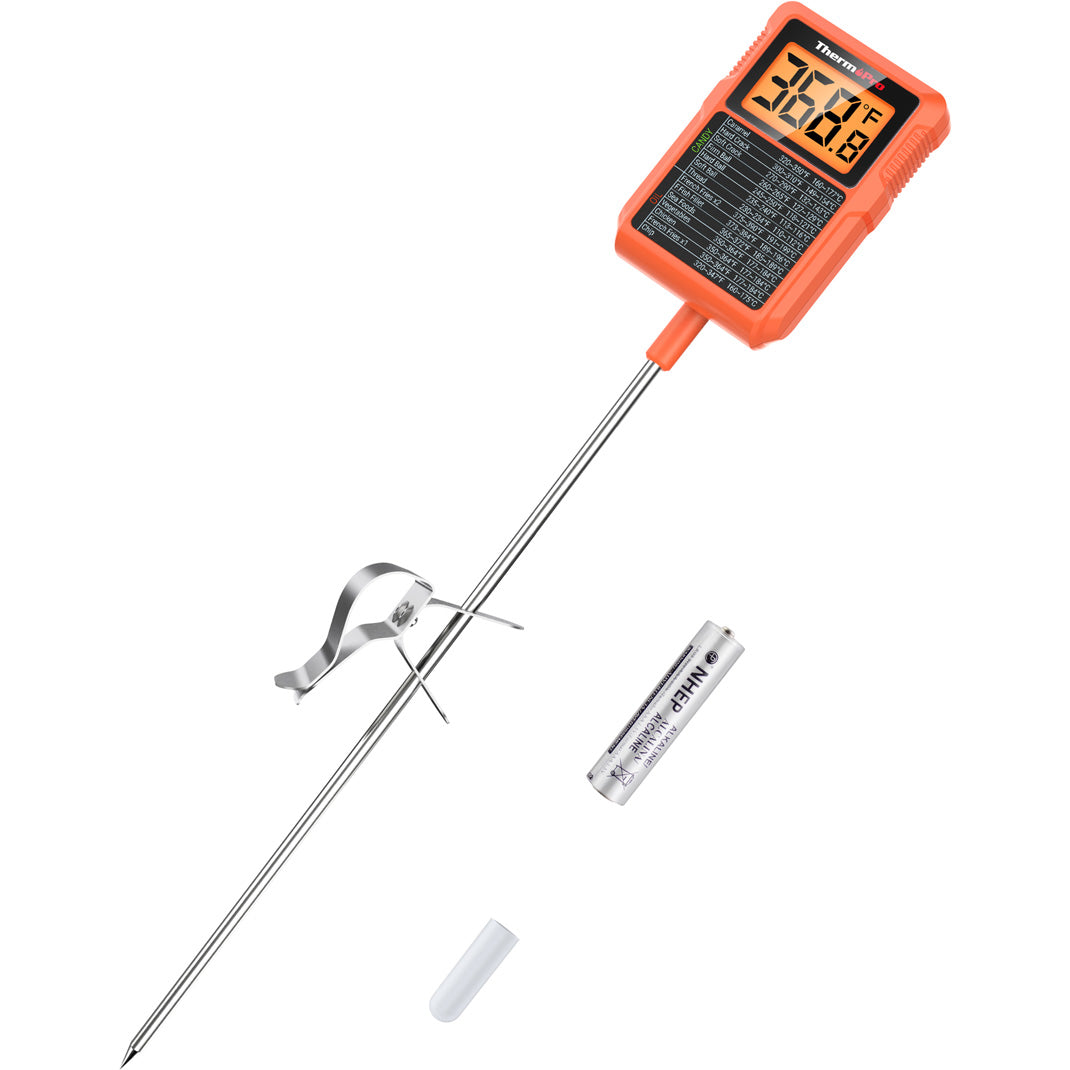
ThermoPro TP511 Candy Thermometer is a dedicated high-heat thermometer built for sugar making and deep-frying, which directly addresses the "candy vs meat thermometer" confusion by giving you the right tool for hot liquids.
Key features:
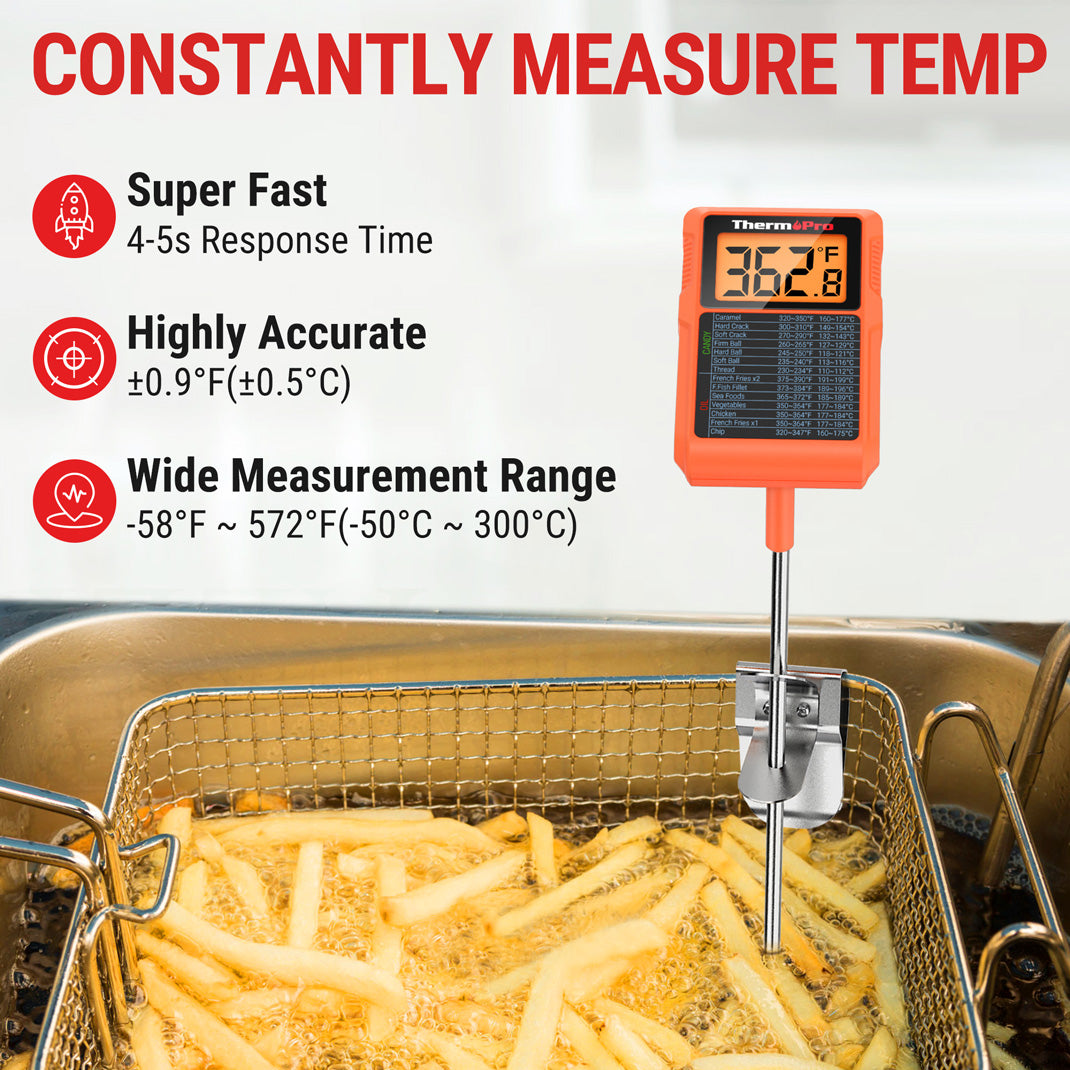
- High temperature range suitable for sugar stages and deep frying: The ThermoPro TP511 is designed to handle -58.0 to 572°F (-50.0 to 300.0°C) high-heat environment of candy syrups and deep-frying oil, so you can safely hit soft-ball, firm-ball, hard-crack, and deep-frying temperatures without maxing out the scale.
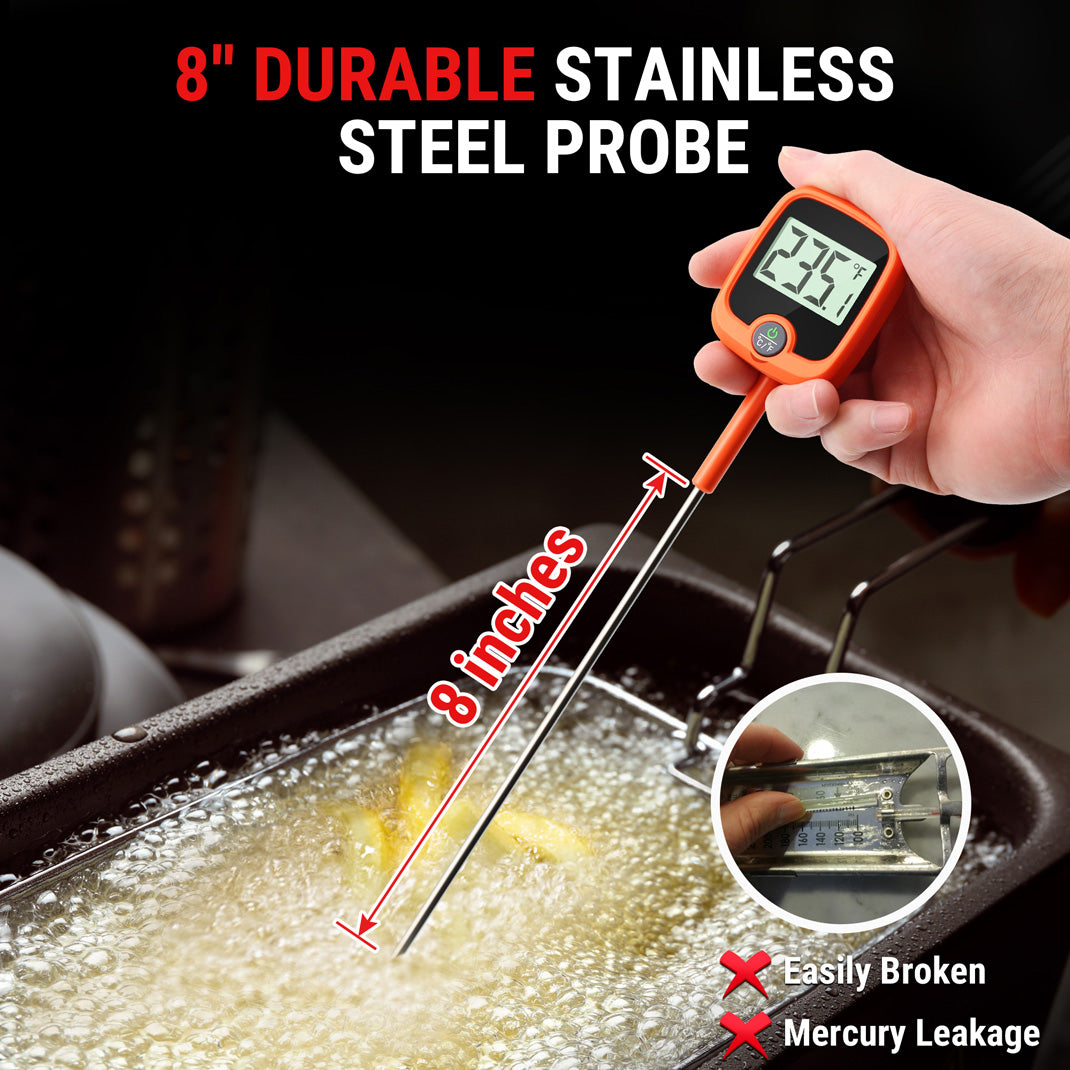
- Long probe with pot clip: Its 8″ long body and integrated clip let you attach the thermometer to the side of your pot, keeping the sensing tip fully submerged in the mixture and your hand safe away from splashes.
- Preset Temperature & Alert System: Set your target temperature in advance, and the ThermoPro TP511 will automatically notify you with a bright flashing backlight once it's reached so you can cook with confidence and avoid overcooking every time.
- Clear, easy-to-read display: Read temperatures at a glance with the large, vapor-resistant LCD. The adjustable head tilts up to 90° for comfortable viewing from any angle, while the touch-activated backlight keeps readings clear and easy to see, even in dim kitchens..

How TP511 helps in real cooking scenarios
- Candy making: When cooking fudge, caramel, brittle, or toffee, the TheromoPro TP511 helps you lock in the correct sugar stage instead of guessing based on bubbles.
- Deep-frying: For fried chicken, fries, or doughnuts, TheromoPro TP511 keeps your oil around the ideal range (often 325-375 °F), making frying more consistent and less stressful.
- Jam and jelly: Many recipes need you to boil the mixture to a specific temperature to set properly, which TheromoPro TP511 can measure accurately.
If your main question is "candy thermometer vs cooking thermometer," and you often cook with boiling sugar or hot oil, the ThermoPro TP511 is a smart choice because it's optimized exactly for that job.
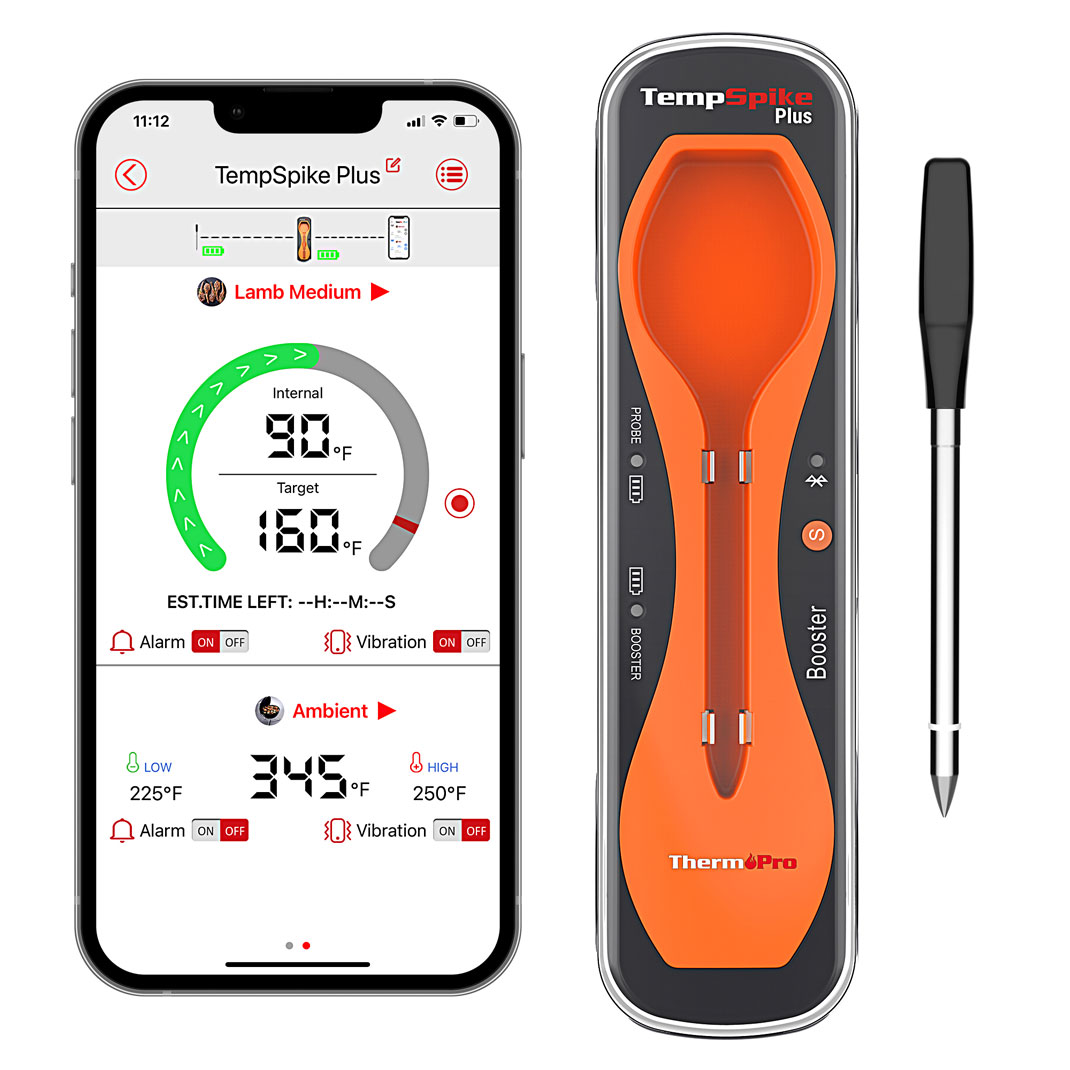
For the Pitmaster & Roast King: TempSpike Pro TP980
If you are tired of being tethered to your grill, the TempSpike Pro TP980 is a revolutionary jump in technology. It is a truly wireless meat thermometer designed for people who grill, roast, or smoke meat and want precise results without being tied to the kitchen.
Key features:
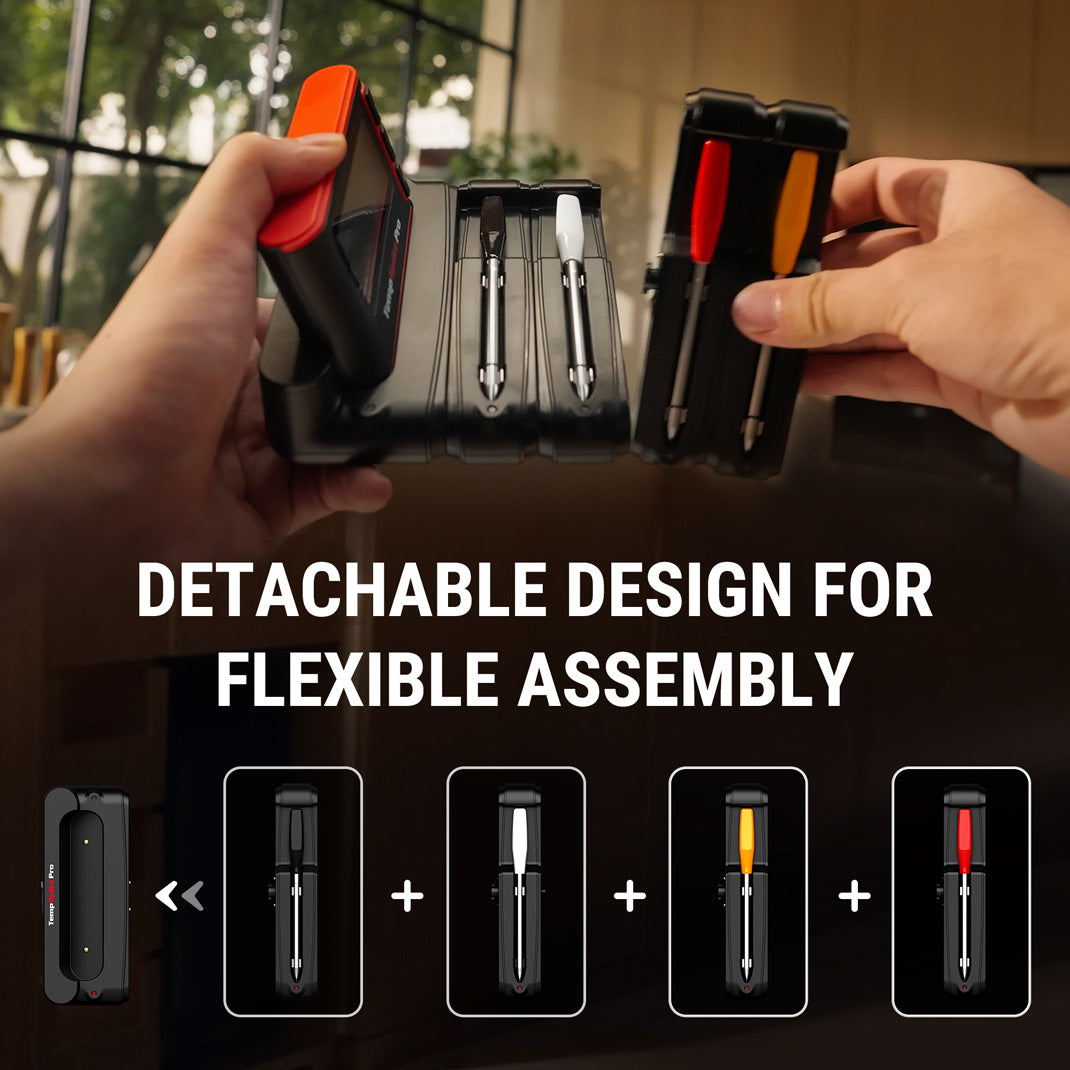
- Wireless probes: The TempSpike Pro TP980 features up to 4 color-coated wire-free probes that stay in the meat while it cooks, sending instant temperature data wirelessly, so there are no cords running out of your oven or grill lid.
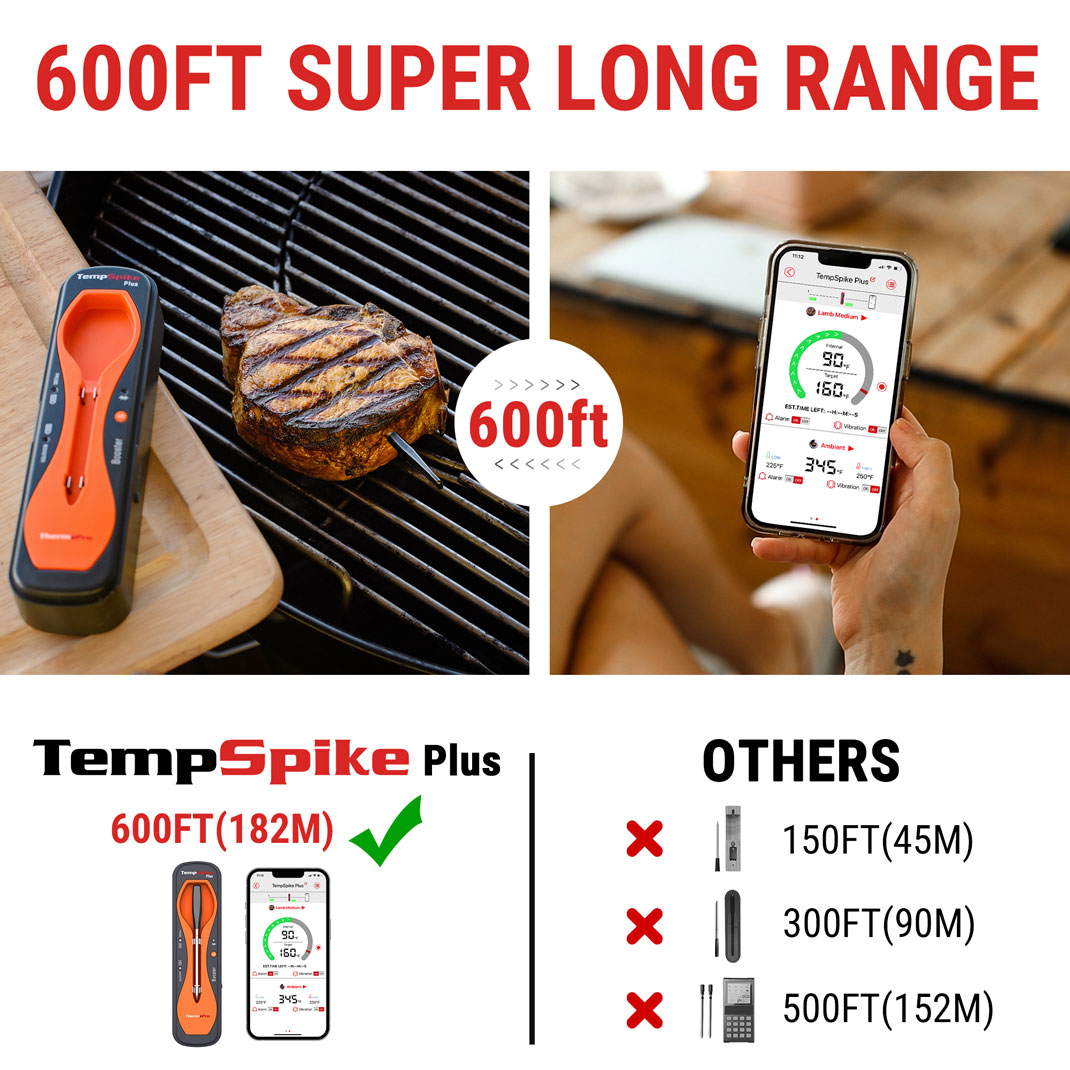
- Wi-Fi & Bluetooth Connectivity: ou can monitor your cook from essentially anywhere your phone has a Wi-Fi connection, and from up to 1060ft away via Bluetooth, which is especially helpful for long smokes or big roasts.
- Dual temperature monitoring (meat + ambient): Each wireless probe has three internal sensors to find the coldest part of the meat and one ambient sensor for the grill temp. That is to say, each probe can track both the internal meat temperature and the surrounding grill or oven temperature, making it easier to manage low‑and‑slow cooks or maintain a specific roasting environment.
- Smart app with alerts: The companion app lets you set target temperatures and receives alerts when your meat reaches the desired doneness, reducing the chance of overcooking.

How TempSpike Pro TP980 helps in real cooking scenarios
- Grilling steaks and chops: Instead of cutting into the meat and losing juices, TempSpike Pro TP980 shows you exactly when a steak has reached medium-rare or medium, so you hit the perfect doneness more consistently.
- Smoking brisket, pork shoulder, or ribs: Long cooks benefit from the unlimited-range monitoring; you can step away from the smoker and still track the temperature curve on your phone.
- Holiday roasts and poultry: For turkey, prime rib, or ham, TempSpike Pro TP980 helps you balance safety and juiciness, hitting the USDA-recommended minimum internal temperatures without drying out the meat.
If you are mainly debating "candy thermometer vs meat thermometer" but do a lot of grilling or roasting, TempSpike Pro TP980 is the clear choice because it's built around meat safety, convenience, and smart remote monitoring.
FAQ about Candy vs. Meat Thermometers
Based on common user queries, here are FAQs which people concern about Candy thermometers and Meat Thermometers.
Q1. What is the difference between a meat and candy thermometer?
The main difference is what they are designed to measure. A candy thermometer is made for very high temperatures in liquids like sugar syrup or oil, while a meat thermometer is designed to measure the internal temperature of solid foods, especially meat, for doneness and food safety.
Q2. Is a candy thermometer different from a meat thermometer in accuracy?
Both candy thermometers and meat thermometers are accurate, but candy thermometers are tuned for higher temperature ranges, while meat thermometers are tuned for the "safe zone" of proteins.
Q3. Are candy thermometers and meat thermometers the same if they are both digital?
Not necessarily. Even digital ones have different heat tolerances for their internal components. Check the max temp before using a digital meat probe in boiling sugar.
Q4. What is the difference between a meat and candy thermometer in terms of safety?
Candy thermometers often have guards or clips to prevent the sensor from touching the pan bottom, which can lead to glass breakage (in old models) or incorrect readings.
Q5. Can I use a meat thermometer for candy?
In most cases, no. Many meat thermometers are not designed to handle the extremely high temperatures of boiling sugar or hot oil, which can damage the probe or cause inaccurate readings.
Q6. What temperature range does a candy thermometer cover?
Most candy thermometers measure from about 100°F up to 400–500°F, making them ideal for candy making, frying, and sugar work.

Q7. What temperature range does a meat thermometer cover?
Meat thermometers usually measure from 32°F to around 212°F, with some models going higher. This range covers all common cooking and food safety needs for meat.
Q8. Is a candy thermometer the same as a deep-fry thermometer?
Yes. Deep-frying thermometer and candy thermometers are essentially the same as they both measure high-heat liquids.
Q9. What is the difference between candy thermometer and meat thermometer in design?
Candy thermometers are long and may clip to a pot; meat thermometers are shorter with a sharp tip to pierce food.
Q10. Which is better for deep-frying: candy thermometer vs meat thermometer?
A candy thermometer is better, because it handles higher temperatures and clips safely to the pot.
Q11. For roasting chicken and steak, meat vs candy thermometer: which should I buy?
A meat thermometer is the right tool for roasting and grilling because it measures the internal temperature of the meat.
Q12. What happens if I use a candy thermometer for a turkey?
It would be very difficult to get an accurate internal reading, potentially leading to undercooked, unsafe meat.
Q13. Can I leave a candy thermometer in the pot while cooking?
Yes, that's its intended use, to monitor the temperature constantly as it rises.
Q14. How do I calibrate my candy and meat thermometers for accuracy?
Test in an ice bath (32°F). Many digital models have a calibration function.
Q15. How do I decide between candy thermometer vs food thermometer if I'm a beginner?
It depends on how you cook:
- If you mostly cook everyday meals and meat, start with a meat thermometer.
- If you make candy or fry often, start with a candy thermometer.
- If you enjoy many cooking styles, owning both is the best choice.
Q16. Do I really need both candy thermometer and meat thermometer?
If you only cook steak, no. If you cook steak and occasionally fry donuts or make holiday fudge, owning both candy thermometer and meat thermometer will prevent kitchen failures.
Q17. What is the difference between a meat and candy thermometer probe length?
Candy probes are usually much longer (8-12 inches) to keep you away from boiling liquid. Meat probes are typically 4-6 inches.
Q18. Can one food thermometer replace both tools?
For best results, having both a candy thermometer and a meat thermometer is the most reliable solution.
Final Thoughts
When it comes to the candy thermometer vs. meat thermometer debate, the answer is about the "state of matter."
- Choose a candy thermometer, like the ThermoPro TP511, if you are working with liquids (oil, sugar, water, milk).
- Choose a meat thermometer, like TempSpike Pro TP980, if you are working with solids (beef, poultry, pork, fish) and want the ultimate wireless freedom.
By understanding the difference between meat thermometer and candy thermometer mechanics, you can cook with the confidence of a professional chef. No more undercooked chicken, and no more crystallized caramel. Happy cooking!
Comments
You May Also Like
10 Common Mistakes When Using a Meat Thermometer
Where Do You Put Thermometer in Chicken?


Recommended product